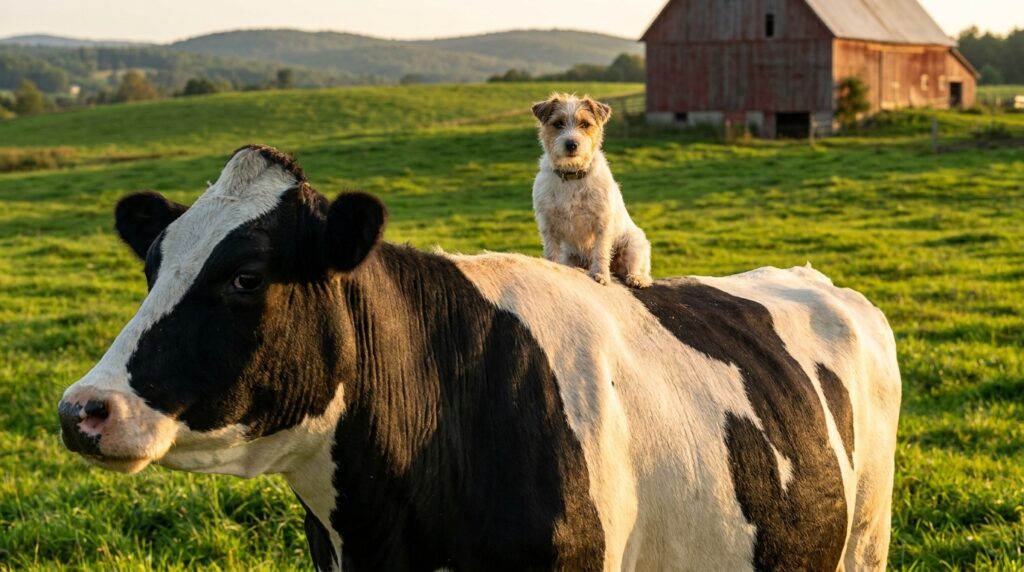
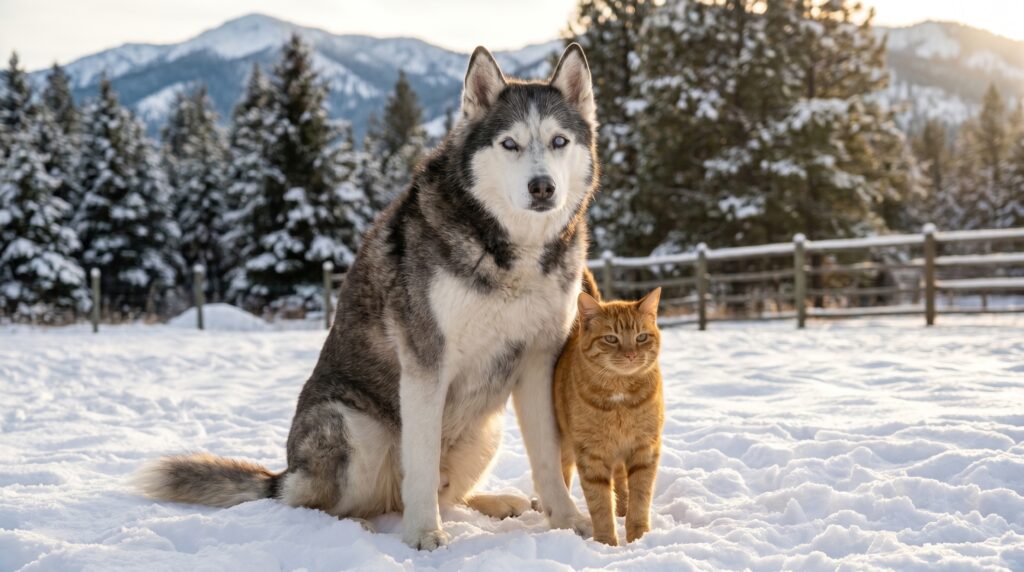
We’ve all seen the videos: a dog grooming a cat, a tortoise sharing a meal with a goat, or a lonely duck following a farmer. These heartwarming pairs capture our imagination and go viral, but is there actual science behind these inseparable animal friendships?
What Drives These Extraordinary Bonds?
While we often anthropomorphize these relationships, researchers suggest several factors are at play, beyond just ‘liking each other.’
1. Mutual Benefit (Commensalism or Mutualism): This is the most practical reason. Sometimes, a bond provides a concrete benefit. The classic example of an oxpecker bird eating ticks off a rhinoceros. For pets, perhaps a larger dog offers warmth and protection to a smaller cat.
2. Mistaken Identity (Imprinting): Animals, especially birds and some mammals, often bond with the first living thing they see after birth or hatching. This can lead to a duckling imprinting on a human or a calf bonding with a farm dog. They see this ‘other’ as part of their family.
3. Social Needs and Loneliness: Many species are deeply social. If a social animal is isolated from its own species, its biological drive for connection can lead it to form a bond with any other available companion. For a lonely lion cub and a lab pup, the mutual need for play and comfort can supersede all other instincts.
4. Shared Environments and Routines: When two different animals are raised together from a young age or share a stable environment for years, they integrate into each other’s life. Their routines merge, and they come to rely on the presence of the other for comfort.
The True Story: An Unlikely & Inseparable Pair
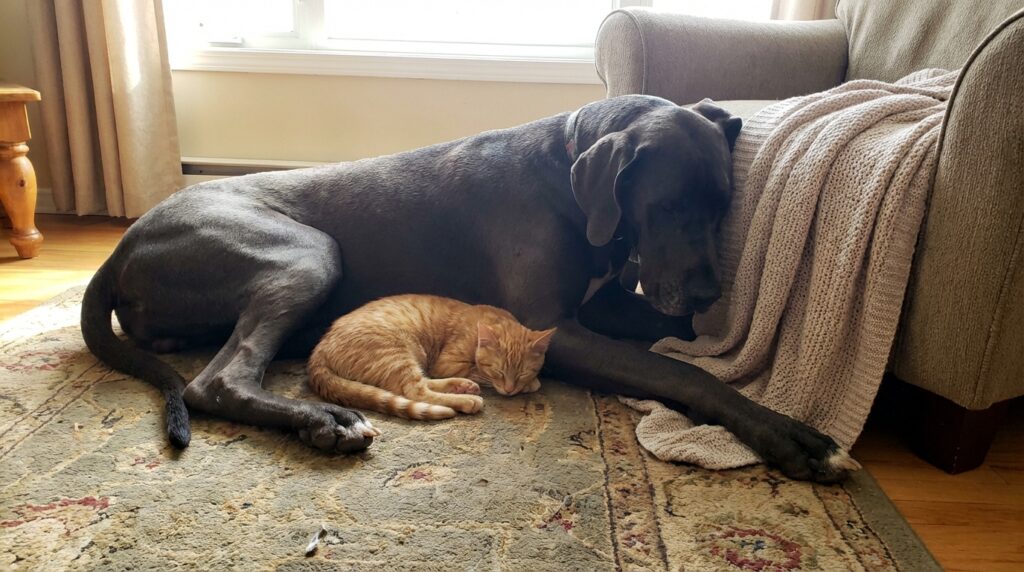
We love the incredible story of ‘Charlie’ the Great Dane and ‘Buster’ the ginger tabby cat. When Buster was just a tiny, abandoned kitten, Charlie, a massive, gentle giant, immediately took him under his protection. Buster would sleep between Charlie’s giant paws, and Charlie would groom Buster with immense care. They were inseparable, with Buster often riding on Charlie’s back like a tiny jockey. “It wasn’t that they tolerated each other,” their owner said, “they needed each other. Charlie became anxiety-prone if Buster was out of sight.” They proved that size and species are no barrier to the most profound friendship.